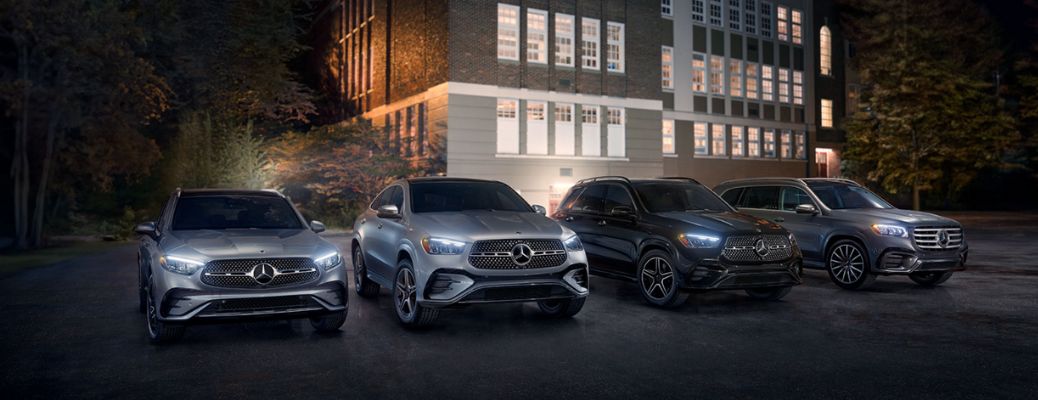
Comparing the 2026 Mercedes-Benz GLS and GLE
Picture the scenario honestly: six people, a full week of luggage, two car seats, and a Saturday morning departure for a road trip that everyone needs to arrive at comfortably rather than compressed into whatever space remained after the bags went in. That’s the specific problem the 2026 Mercedes-Benz GLS vs. GLE comparison is actually solving — not which SUV performs better in a magazine test, but which one accommodates the reality of family travel without requiring passengers to negotiate space or comfort before the highway even begins. GLE offers three rows in a package sized closer to a large crossover, while GLS arrives as Mercedes-Benz’s full-size three-row SUV with dimensions that reflect a genuine commitment to rear-row usability rather than three-row presence as a trim-level talking point. Mercedes-Benz of Scottsdale carries both the 2026 GLS and GLE across available configurations and can put you in both vehicles back-to-back before you commit to either.
What Is the Difference Between the 2026 Mercedes-Benz GLS and GLE?
GLE and GLS share the same Mercedes-Benz brand positioning and similar technology architecture, but they arrive from different platform starting points — GLE is a midsize SUV with an available third row, while GLS is a full-size SUV built from the outset around three-row family accommodation as the primary design brief rather than an optional capability. The dimensional difference between them is measurable and immediately felt by rear-row passengers: GLS provides third-row legroom that adults can occupy on longer drives without the cramped posture that GLE’s third row imposes on anyone over 5’8″. If you’re buying a three-row SUV because you genuinely need three rows that function rather than three rows that exist, the GLS makes a more defensible purchase than the GLE for that specific use case — and the price difference between them reflects that engineering reality rather than simply luxury tier positioning.
Explore the Advanced Technology of the 2026 Mercedes-Benz GLS SUV
Which Has More Interior Space: Mercedes-Benz GLS or GLE?
GLS out measures GLE on every interior dimension that matters for family use — passenger volume, third-row legroom, shoulder room across the second row, and the headroom that the GLS’s taller roofline provides throughout. GLE third-row occupants experience a space that works for children on shorter trips and becomes increasingly uncomfortable for adults as trip duration extends — a trade-off that families with growing children should evaluate honestly against their expected passenger mix over the vehicle’s ownership lifetime. Second-row accommodation in both vehicles is genuinely good for adult passengers; the distinction between GLS and GLE becomes most apparent specifically in the third row, which is where the size investment of a full-size SUV produces the most direct return for buyers whose usage actually fills all three rows.
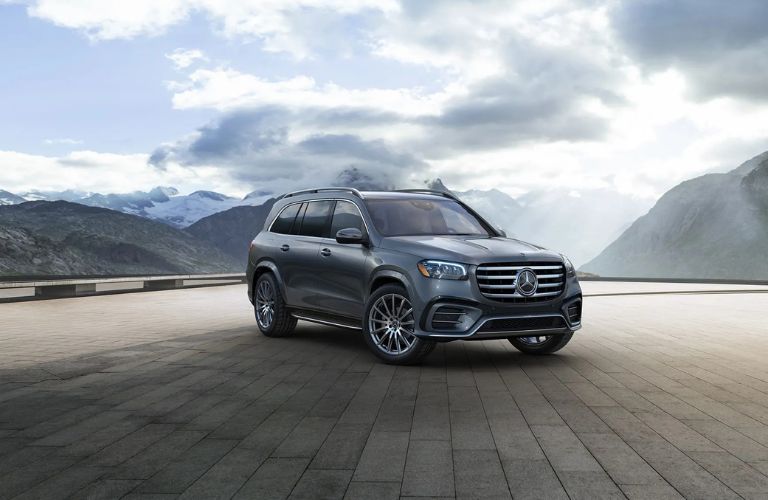

Which Has More Cargo Space: GLS or GLE?
Behind the third row, GLS provides approximately 17.4 cubic feet of cargo space compared to GLE’s 13.8 cubic feet in the same configuration — a difference that becomes immediately relevant when six passengers generate six bags worth of luggage that needs to fit without redistributing into the cabin. Fold the third row in either vehicle and cargo capacity expands substantially, with GLS reaching approximately 50 cubic feet and GLE reaching approximately 47 cubic feet — figures that close the gap between the vehicles when the third row isn’t occupied. For families who regularly use all three rows and need meaningful cargo capacity simultaneously, GLS’s advantage behind the third row is the most practically significant specification difference between the two vehicles.
How Do the 2026 GLS and GLE Compare on Performance?
GLE 450 4MATIC® runs a 3.0-liter turbocharged inline-six with EQ Boost mild-hybrid assistance producing 375 horsepower — a powertrain that covers most family driving scenarios with adequate reserve without the fuel consumption that larger displacement alternatives require for equivalent everyday performance. GLS 450 4MATIC® uses the same fundamental powertrain in a larger, heavier body — which produces slightly slower acceleration figures but comparable highway behavior where the additional weight is less apparent than during aggressive acceleration from rest. AMG® configurations are available on both platforms for buyers whose family use case includes performance priorities alongside passenger capacity, with AMG® GLS 63 producing 603 horsepower and AMG® GLE 63 S producing 603 horsepower — equal outputs in bodies with different size and weight characteristics that produce different dynamic personalities.
Which Has the Better Family-Friendly Interior?
GLS wins on the specific features that family travel demands — third-row access through wider second-row doors and more accommodating seat tumble mechanisms, more generous third-row legroom that reduces the negotiation required when assigning seats on longer trips, and cargo volume behind the third row that doesn’t require creative loading when the vehicle is fully occupied. GLE’s family-friendliness is genuine within its size constraints — the interior quality, second-row accommodation, and technology package are all strong, but the third row exists as a functional compromise rather than a resolved seating position. You should choose GLE if your family of five or six uses the third row occasionally for shorter trips and prioritizes GLE’s more manageable exterior dimensions in parking and urban maneuvering; choose GLS if regular third-row use with actual adults is a consistent operational requirement rather than an occasional accommodation.
Which SUV Offers Better Luxury and Technology?
Both GLS and GLE access the same fundamental MBUX technology architecture — the 12.3-inch instrument cluster, central touchscreen, available MBUX Hyperscreen, over-the-air update capability, and the full driver assistance package that Mercedes-Benz applies across the current lineup. Where GLS differentiates is in available E-ACTIVE BODY CONTROL suspension, which uses individual wheel actuators to actively manage body motion and enable the Curve tilting function — and in the Maybach GLS variant that exists above the standard GLS as the family SUV equivalent of the Maybach S-Class. GLE’s technology and luxury content at equivalent trim levels matches GLS closely enough that the decision between them on technology grounds alone doesn’t favor either vehicle decisively — the relevant distinction remains the size and third-row accommodation that drove the comparison from the beginning.
Discover Uncharted Territory: The 2026 Mercedes-Benz GLE 53 4MATIC+ SUV Off-Road Prowess
Explore the 2026 Mercedes-Benz GLS and GLE in Scottsdale, AZ
Our team at Mercedes-Benz of Scottsdale carries both the 2026 GLS and GLE across available configurations and actively encourages family buyers to evaluate the third row in both vehicles rather than making the decision from the second row — the difference that matters most in the 2026 Mercedes-Benz GLS vs. GLE comparison is most apparent from the seat that most buyers spend the least time evaluating. We can arrange back-to-back third-row evaluations, compare AMG® configurations alongside standard powertrains, and discuss financing structures for both vehicles within the same conversation.
Resolving the 2026 Mercedes-Benz GLS vs. GLE question for your family requires time in both vehicles rather than specification comparison — the third-row experience, cargo access with full passenger load, and the size difference in actual parking and maneuvering scenarios all inform the decision in ways that numbers don’t fully convey. Visit Mercedes-Benz of Scottsdale to evaluate current GLS and GLE inventory across available trims, sit in all three rows of each vehicle with your actual passengers if possible, review financing options that work within your family’s budget, and schedule test drives that cover the driving scenarios your family actually encounters.