How to Prepare Mercedes-Benz for Fall Driving in Scottsdale
Scottsdale’s monsoon period subjects vehicles to conditions that don’t appear in typical maintenance interval planning — sustained heat above 110°F, sudden temperature drops during storm events, road surface flooding that forces debris into brake assemblies and suspension components, and humidity levels that accelerate corrosion on electrical contacts faster than the desert’s baseline dry climate does. Mercedes-Benz vehicles are engineered to handle these conditions, but engineering tolerance isn’t immunity — components that absorbed six weeks of monsoon stress without failing may be operating closer to their service limit than the dashboard indicates. A post-monsoon inspection is less about finding catastrophic failures and more about catching the gradual degradation that becomes a real problem three months into fall driving.
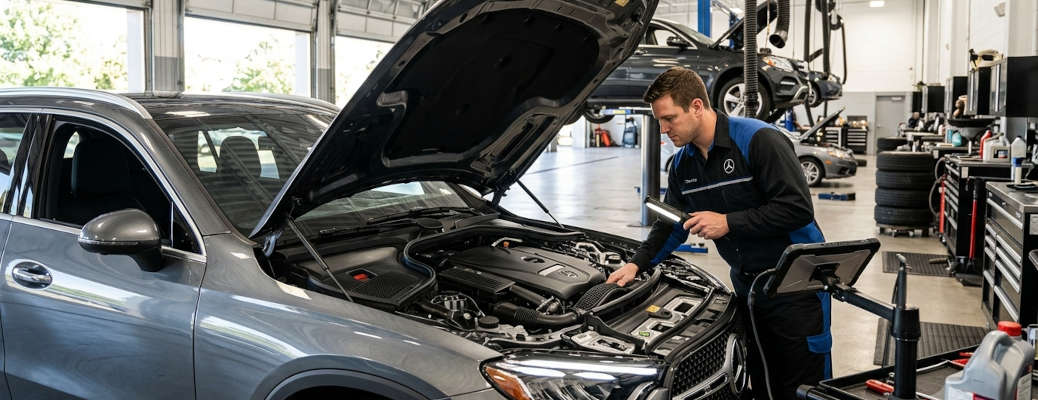
Our service team at Mercedes-Benz of Scottsdale can conduct a comprehensive post-monsoon inspection that covers all the items on this checklist — tires, brakes, battery, fluids, filters, seals, and HVAC — through a structured evaluation performed by technicians who work specifically on Mercedes-Benz vehicles and understand how Scottsdale’s climate affects each system specifically. We use factory diagnostic equipment, genuine Mercedes-Benz parts, and manufacturer service standards rather than general automotive procedures adapted to a platform they were designed for.
Check Your Mercedes-Benz Tires for Monsoon Damage
Monsoon roads collect sharp debris that tires roll over at highway speed — curbing impacts during flooded lane avoidance, gravel displacement from wash crossings, and sustained heat-softened pavement contact all contribute to sidewall stress that isn’t always visible without close inspection. Check each tire for sidewall bulges, cuts, and uneven tread wear patterns that suggest alignment shift from a hard impact absorbed during a rain event. If tread depth approaches 4/32 of an inch, replace before fall drives where morning dew on desert roads creates traction conditions that worn tires handle poorly.
Why Is My Mercedes-Benz Car Heater Blowing Cold Air?
Inspect the Brakes Before Fall Driving

Road flooding during monsoon events forces water and fine sediment into brake components repeatedly — rotors develop surface rust that typically clears within a few stops, but brake pads that absorbed moisture repeatedly may show reduced bite consistency before they reach typical wear indicators. If you notice any pulsation, extended stopping distance, or unusual noise during or after storm events, those symptoms warrant inspection rather than a wait-and-see approach. Fall canyon driving toward higher elevations puts sustained braking demands on components that summer freeway commuting doesn’t — conditions change, and brake health should be confirmed before they do.
Replace Worn Windshield Wipers and Check Washer Fluid
Monsoon season runs wiper blades through more cycles in six weeks than some Arizona vehicles complete in six months — the combination of heat degradation and constant rubber-on-glass contact during storm events accelerates blade wear considerably faster than the typical annual replacement recommendation accounts for. Streak patterns, skipping, or noise during operation indicate a blade that’s past its useful life regardless of how recently it was installed. Washer fluid reservoir levels drop faster during monsoon season; refill with a formula appropriate for Arizona’s temperature range rather than the diluted alternatives that freeze protection formulas designed for colder climates provide unnecessarily here.
Check Exterior Lights and Visibility Features
Monsoon rain, road spray, and dust accumulation compromise headlight lens clarity over time — a lens that looks acceptable during daylight appears noticeably dimmer on a dark fall evening highway drive than its wattage suggests it should. Check all exterior lights including fog lamps, brake lights, and turn signals for moisture intrusion that monsoon conditions can drive into unsealed housings. Mercedes-Benz digital light systems and adaptive headlight functions depend on sensors that dust accumulation affects — cleaning sensor windows as part of the post-monsoon inspection maintains the system’s intended performance.

Inspect Your Mercedes-Benz Battery and Electrical System
Arizona’s summer heat degrades battery capacity more aggressively than cold climates do — battery chemistry under sustained heat stress loses reserve capacity in ways that don’t become apparent until a cooler morning reveals that cranking power has diminished below reliable starting threshold. If your battery is approaching three years old and spent the summer in Scottsdale’s heat, load-test it before fall rather than waiting for a no-start event in a parking garage. Electrical connectors and ground straps exposed to monsoon humidity can develop corrosion that creates intermittent electrical faults — check accessible connection points for the greenish buildup that indicates moisture intrusion.
Check Engine Oil, Coolant, and Other Fluids
Sustained monsoon heat and the cooling system demands that high ambient temperatures create accelerate fluid degradation beyond what mileage-based service intervals anticipate for more temperate climates. Check engine oil condition — color and viscosity changes indicate degradation that mileage alone doesn’t capture. Coolant condition, brake fluid moisture content, and power steering fluid level all warrant review after a season that placed above-average thermal demands on every system simultaneously.
Replace or Inspect the Cabin and Engine Air Filters
Scottsdale’s monsoon dust storms deposit particulate that cabin and engine air filters accumulate rapidly — a filter that was at mid-life before monsoon season may be at end-of-life by October without the mileage accumulation that typically triggers replacement. Restricted cabin filters reduce HVAC effectiveness precisely when you want the system working efficiently for fall drives, and restricted engine air filters affect combustion efficiency in measurable ways. Pull both filters and evaluate visually; if the cabin filter shows significant dust loading, replacement costs less than the discomfort of diminished HVAC performance through Arizona’s mild but still warm fall months.
Inspect Your Mercedes-Benz for Water Intrusion
Flash flooding and heavy rainfall events during monsoon season force water into door seals, sunroof drainage channels, and trunk weatherstripping in ways that a dry-climate vehicle may not have been stress-tested against before purchase. Check the footwell carpets for dampness that indicates seal compromise, examine the sunroof drainage channels for debris blockages that redirect water into the headliner, and inspect the trunk for moisture accumulation that suggests weatherstripping failure. Water intrusion left unaddressed creates mold, electrical problems, and corrosion on a timeline that makes early detection considerably more economical than late discovery.
Beyond the Star: How Genuine Mercedes-Benz Parts Protect Your Warranty and Resale Value
Check the HVAC System Before Scottsdale’s Fall Drives
Fall in Scottsdale means the air conditioning finally gets a modest break — but the heating system, which may not have run since February, needs confirmation that it’s operational before a November morning drive to Flagstaff requires it. Test both heating and cooling function, check that air distribution modes operate across all settings, and verify that the recirculation function engages without unusual noise or odor that indicates mold accumulation in the evaporator housing. Evaporator mold from monsoon humidity trapped in an inactive HVAC system produces a distinctive musty smell that gets significantly worse when the heater first activates — catching it now through a system flush is less objectionable than discovering it in October.
Get Your Mercedes-Benz Fall-Ready in Scottsdale, AZ
Your Mercedes-Benz end-of-monsoon readiness is best confirmed by professionals who know exactly what Scottsdale’s summer does to these specific vehicles. Schedule a fall service appointment at Mercedes-Benz of Scottsdale, let our team work through the checklist systematically, and start the season knowing your vehicle is prepared for the drives that make Arizona fall worth experiencing. Contact our service department today — the appointment takes less time than a roadside breakdown.