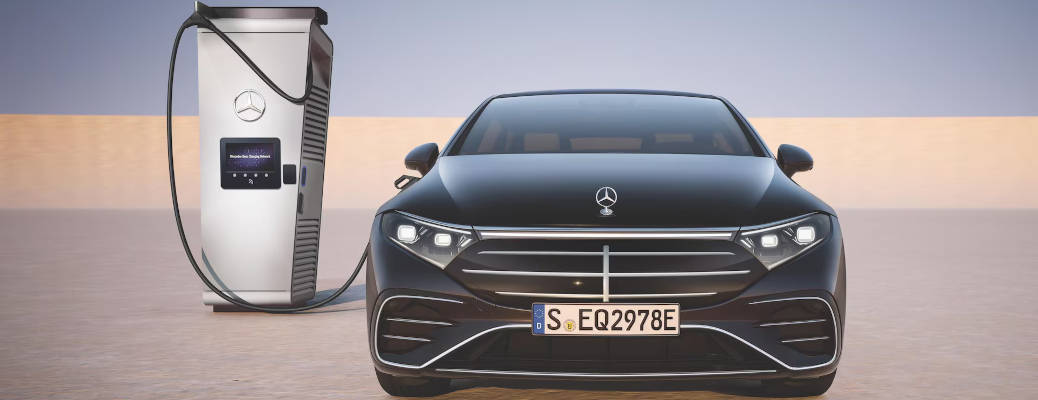
The arrival of May in the Sonoran Desert signals a significant shift in temperature, as the mercury begins its inevitable climb toward the triple digits. At Mercedes-Benz of Scottsdale, located in the heart of Scottsdale, AZ, we understand that local drivers prioritize performance and reliability above all else. As we encounter the first 100°F days of the year, many electric vehicle enthusiasts naturally wonder about the endurance of their luxury sedans. Specifically, how does the Mercedes EQS perform in desert heat? This report examines the sophisticated engineering that allows the 2026 EQS to thrive while other vehicles might falter under the intense Arizona sun.
How Does the Mercedes EQS Perform in Desert Heat?
The 2026 Mercedes-Benz EQS is engineered with a robust thermal management system designed to mitigate the stressors of extreme ambient temperatures. Furthermore, the high-voltage battery utilizes an intelligent liquid cooling circuit that actively circulates coolant to maintain an optimal operating window. Mercedes-Benz provides data indicating that the battery chemistry, which features a refined 8:1:1 ratio of nickel, cobalt, and manganese, is specifically stabilized for thermal resilience. Consequently, even when the Scottsdale pavement radiates intense heat, the internal battery sensors work in tandem with the Mercedes App to monitor and regulate cell temperatures in real time.
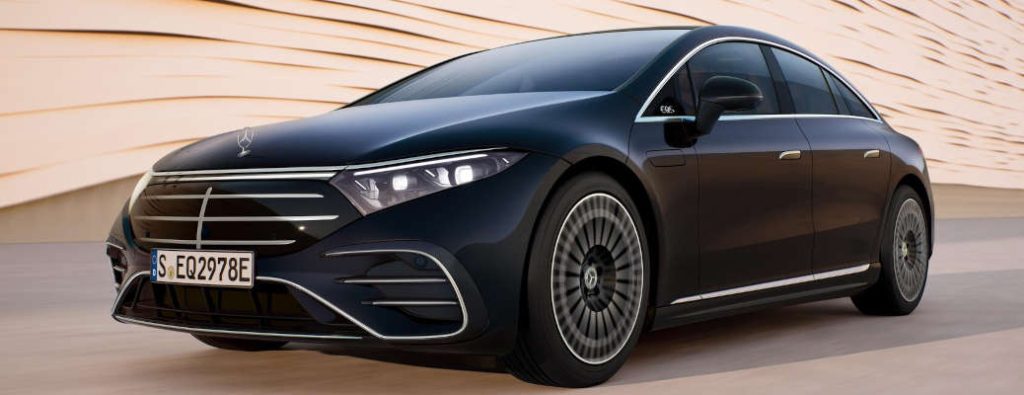
Advanced Cooling Technology and Real-World Endurance
To achieve such high levels of reliability, the EQS employs a sophisticated heat exchanger system that functions similarly to a traditional radiator but with much higher precision. Moreover, this system does not merely react to heat; it anticipates it through Electric Intelligence navigation. If you are navigating to a DC fast-charging station, the vehicle pre-conditions the battery by cooling it in advance to ensure the fastest possible charging speeds upon arrival. This proactive approach is a primary reason why many owners ask how the Mercedes EQS performs in desert heat, especially when planning long trips to Sedona or Tucson.
- Active Liquid Cooling: A dedicated low-temperature circuit ensures the 118-kWh battery remains within its “sweet spot” even during 100°F+ afternoons.
- PTC Booster Heater and Coolant Pumps: These components manage the flow of energy to prevent overheating during high-performance driving.
- Aerodynamic Efficiency: The industry-leading drag coefficient reduces the workload on the motors, which in turn minimizes internal heat generation.
- Mercedes App Integration: Owners can monitor battery health and initiate cabin pre-conditioning while the vehicle is still plugged in, preserving range.
You Might Also Like: Discover the 2026 Mercedes-Benz EQS 450 4MATIC® Sedan
Experience the Future of Electric Luxury in Scottsdale
As the summer season approaches, ensuring your vehicle is prepared for the elements is paramount for maintaining its long-term value. Moreover, we invite you to visit Mercedes-Benz of Scottsdale to receive a comprehensive diagnostic of your high-voltage system. Our factory-trained technicians use specialized equipment to verify that your cooling loops and thermal sensors are operating at peak efficiency. While the desert climate is demanding, the engineering behind the EQS ensures that you never have to compromise on power or comfort. Stop by our showroom today to discover how the Mercedes EQS performs in desert heat firsthand with a private test drive.
Disclaimers
EPA estimated driving range with a fully charged battery. Driving range may vary based on terrain, temperature, driving style, optional equipment, use of vehicle features, and other factors. For informational and comparison purposes only. See your dealer for more information.
Charging times are estimated and may vary by location, equipment, and other conditions. Charging stations must be compatible with Combined Charging System (CCS) or accessory Mercedes-Benz NACS DC Fast-charging Adapter, available from your dealer. See your dealer for more information.