Mercedes-Benz Crash Test Facility
Safety, for Mercedes-Benz, isn’t just a feature—it’s a philosophy engineered down to the millimeter. While most drivers prefer to avoid accidents entirely, the engineers behind the Mercedes-Benz crash test facility spend every day running straight into them. Literally. At Mercedes-Benz of Scottsdale, we’re proud to represent a brand that puts safety through intense scrutiny, all in the name of saving lives and protecting what matters most. Let’s take a high-speed look into the Mercedes-Benz crash test facility —and why it matters to you.
Where Precision Meets Impact
Located in Sindelfingen, Germany, the Technology Centre for Vehicle Safety (TFS) is a cathedral of caution. With a footprint of 55,000 square meters—roughly the size of ten football fields—the Mercedes-Benz crash test facility combines computer simulations and high-impact collisions to analyze, understand, and enhance vehicle safety.
Before a new model ever makes it to a showroom floor, it goes through more than 15,000 virtual crash simulations and around 150 physical crash tests. These tests range from head-on collisions to side impacts at obscure angles, even involving two moving vehicles. The goal? To recreate—and survive—every imaginable real-world accident.
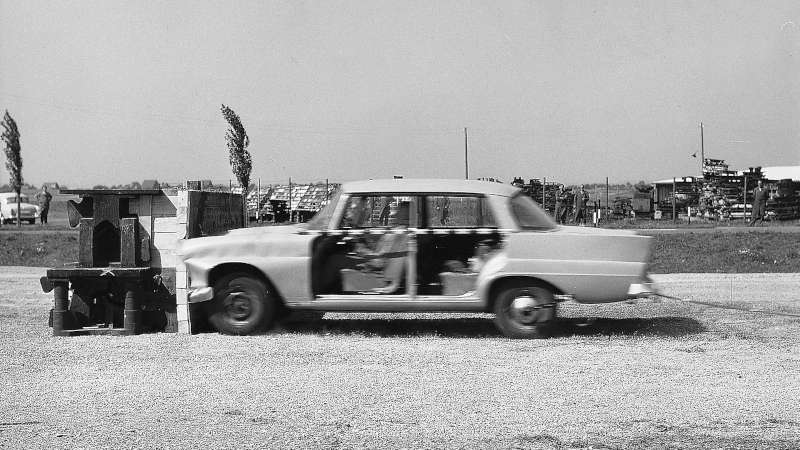
From Sleds to Shattered Steel
While some vehicles heroically face full-speed impacts, not every test ends with a crumpled hood. The facility also runs about 1,700 sled tests per year. These involve launching specific car components on a sled and abruptly stopping them—think of it as a safe, efficient shortcut to understanding how a seatbelt or airbag will respond under duress.
Here’s what sets the Mercedes-Benz safety lab apart:
- Crash dummies up to 1.88 meters tall and weighing 100 kg simulate a wide range of real passengers.
- The longest crash track spans over 200 meters, and its flatness is accurate to within five millimeters per 100 meters.
- Up to 900 full crash tests can be conducted annually, each observed by high-resolution cameras protected by plate glass.
The Human Side of Safety Engineering
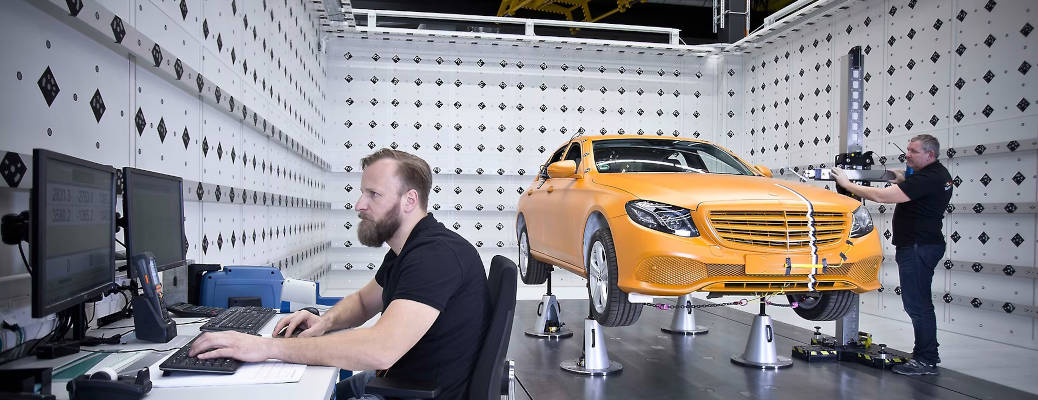
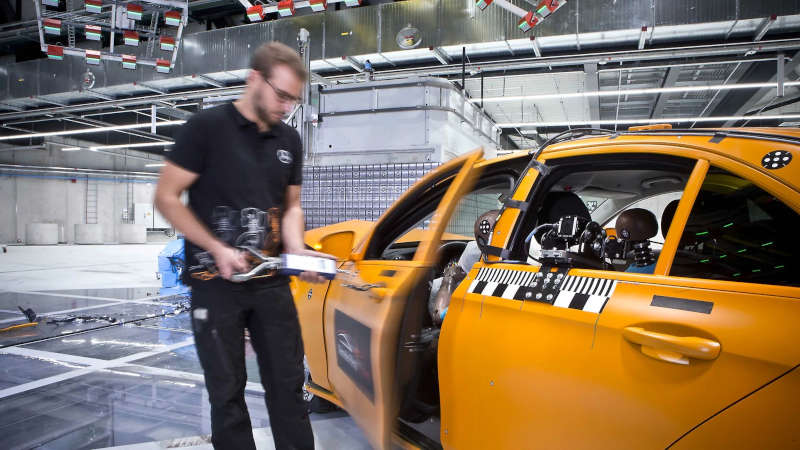
Before the rubber screeches and the crash block meets its unfortunate visitor, every inch of the test vehicle is digitally measured. Post-crash, the process is repeated to analyze how energy transferred through the structure. The “colleagues” inside—our carefully outfitted dummies—are evaluated for injury risk, seatbelt performance, and airbag deployment.
After one such test, an engineer opens the driver’s side door with a quiet crunch and says, “That’s a good start. Now let’s take a look at our colleagues inside.” Even in the most data-driven lab, the mission remains deeply human.
You Might Also Like: The Mercedes-Benz Commitment to Safety
Why It Matters for Drivers Near Scottsdale
Mercedes-Benz has spent more than 60 years pursuing accident-free driving. Thanks to breakthroughs like Active Brake Assist, PRE-SAFE® systems, and reinforced safety cells, today’s models are smarter and safer than ever. Yet, the brand knows that technology must still be tested in the crucible of real-world physics.
That’s why when you visit a Mercedes-Benz dealership near Scottsdale, you’re not just browsing luxury vehicles—you’re stepping into a legacy of innovation and protection. Every car on our lot carries with it the confidence of surviving hundreds of tests in one of the world’s most sophisticated crash labs.
A Commitment You Can Count On: At Mercedes-Benz, Safety Is Priority One
The Mercedes-Benz crash test facility is more than just steel and science—it’s a testament to the brand’s relentless pursuit of safety. From virtual simulations to crumple zones designed with surgical precision, every test reaffirms the company’s promise to protect its drivers and passengers, no matter what. At Mercedes-Benz of Scottsdale, we believe that peace of mind should come standard with every drive. And thanks to decades of research, that belief becomes reality behind the wheel of every Mercedes-Benz.